
Sign up to receive quotes
What Is WebXR? The Foundational Technology Behind Browser-Based AR and VR Experiences


Millions of users are accessing virtual reality (VR) and augmented reality (AR) experiences every day—without installing dedicated applications or relying on specialized hardware. All they need is a web browser. This is made possible by WebXR, a web standard API that enables developers to build and deliver immersive AR and VR experiences directly through the browser.
As organizations increasingly invest in digital transformation and spatial computing, WebXR is reshaping how immersive experiences are developed, distributed, and accessed at scale.
This article provides a comprehensive overview of WebXR, covering its core concepts, supported browsers, key benefits, and real-world applications.
What is WebXR?
WebXR is a collection of web standards and technologies designed to support the rendering of 3D content on Virtual reality (VR) devices as well as the integration of digital graphics into real-world environments through Augmented reality (AR).
At the center of this ecosystem is the WebXR Device API, which is responsible for: Detecting and selecting compatible XR devices, rendering immersive 3D scenes at appropriate frame rates, tracking user movement and orientation, processing input from controllers and interaction devices, managing communication between web applications and XR hardware
The letter “X” in WebXR serves as a variable representing any form of “_____ Reality”, including: Virtual Reality (VR), Augmented Reality (AR), Mixed Reality (MR), Extended Reality (XR). future reality technologies yet to emerge
Rather than focusing on a single technology category, WebXR was designed as a flexible framework capable of supporting the entire spectrum of immersive experiences.
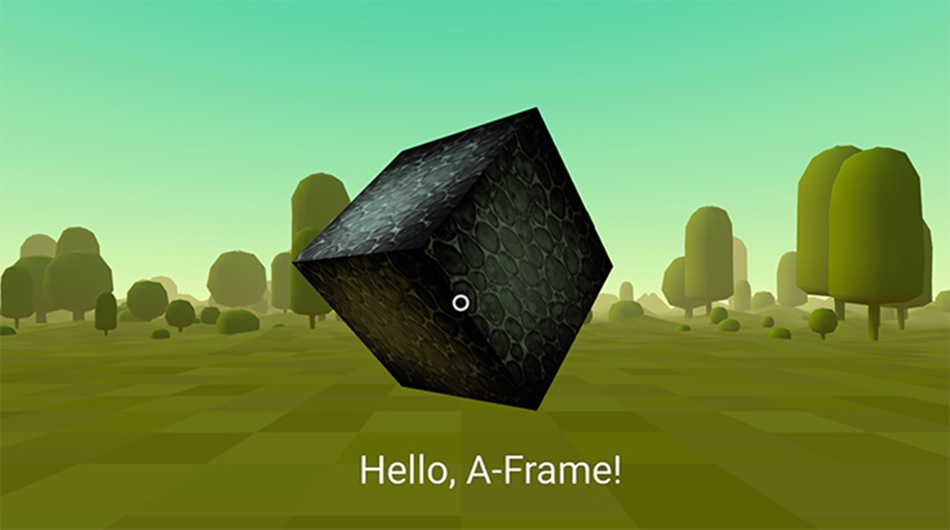
From a technical perspective, WebXR operates by calculating a separate 3D perspective for each of the user's eyes, rendering both viewpoints into a single framebuffer, and delivering the result to the target display device—whether it is a high-end VR headset, a smartphone, or a conventional computer screen.
This stereoscopic rendering process enables users to perceive depth and spatial relationships naturally, creating a convincing sense of presence within virtual and augmented environments.
The Evolution of WebXR
The journey toward bringing VR and AR experiences to web browsers began around 2016 with the introduction of the WebVR API, the first web standard designed to enable virtual reality experiences on the web.
However, WebVR quickly revealed several limitations. It was built exclusively for VR applications and lacked the flexibility required to support Augmented Reality (AR), Mixed Reality (MR), and emerging immersive technologies. In addition, cross-platform compatibility remained a challenge.
To address these limitations, the W3C Immersive Web Working Group was established on September 24, 2018, with the goal of creating standardized APIs for high-performance VR and AR experiences on the web.
On February 5, 2019, the first public working draft of the WebXR Device API was released, marking the official transition from WebVR toward a broader and more future-proof framework for immersive experiences.
A major milestone was reached on March 31, 2022, when the WebXR Device API advanced to Candidate Recommendation status. This stage signified that the specification was mature enough for large-scale implementation testing across multiple browsers and platforms.
The migration from WebVR 1.0 to WebXR began around 2018, and by 2020, WebVR had been removed from most major browsers in favor of the newer standard.
As of October 2025, the WebXR Device API remains in the Candidate Recommendation Draft (CRD) phase and has not yet achieved full W3C Recommendation status. Nevertheless, it continues to evolve as a living standard, with ongoing contributions from browser vendors, hardware manufacturers, and the broader immersive web community.
Today, WebXR serves as the primary foundation for delivering browser-based VR, AR, and Mixed Reality experiences, paving the way for a more accessible and interoperable immersive web ecosystem.
Browsers support WebXR
WebXR is supported by modern web browsers, including Chrome, Edge, Opera, and Samsung Internet, across both desktop and mobile platforms. In 2025, WebXR capabilities continue to expand with support for advanced features such as hand tracking, spatial anchors, and enhanced compatibility with next-generation XR devices.
The table below summarizes WebXR support across major browsers:
| BROWSER | SUPPORT LEVEL | NOTES |
| Google Chrome 79+ | Full Support | Available on desktop and Android devices |
| Microsoft Edge 79+ | Full Support | Chromium-based, offering functionality comparable to Chrome |
| Samsung Internet 12+ | Strong Support | Optimized for Samsung Galaxy smartphones and tablets |
| Meta Quest Browser | Full Support | Primary browser for VR experiences, supporting hand tracking and AR passthrough capabilities |
| Opera 66+ | Basic Support | Supported through the Chromium engine |
| Safari (visionOS 2.0) | Limited Support | Currently supports immersive VR experiences only on Apple Vision Pro |
| Firefox | Not Supported | Development was discontinued following the retirement of Firefox Reality |
Benefits of WebXR?
No Installation Barriers
WebXR offers a significantly lower barrier to entry compared to native application development. Users can access immersive XR experiences directly through a web browser without downloading or installing additional software.
For businesses, this creates a powerful distribution advantage. Experiences can be shared instantly through URLs, QR codes, email campaigns, social media, or embedded directly into existing websites, reducing friction and increasing user engagement.
Multi-Device Access from a Single Codebase
WebXR is designed to work across a wide range of devices, including VR headsets, AR-enabled smartphones, tablets, and desktop computers—all from a single application.
Organizations no longer need to develop and maintain separate applications for different operating systems and hardware platforms, reducing development costs and accelerating deployment.
Built on Open Web Standards
WebXR leverages familiar web technologies such as HTML, CSS, JavaScript, and WebGL to create interactive 3D environments.
As a result, existing web development teams can build immersive experiences using their current skill sets without necessarily transitioning to game engines such as Unity or Unreal Engine.
Seamless Integration with the Web Ecosystem
WebXR integrates naturally with other web technologies, including: WebGL for real-time 3D rendering, WebAudio API for spatial and immersive audio, Gamepad API for controller input, WebGPU for next-generation graphics performance
This ecosystem enables developers to create sophisticated XR experiences while preserving the openness, accessibility, and interoperability of the web platform.
Security and Privacy by Design
WebXR is built to support low-latency, high-precision immersive experiences while addressing the unique security and privacy considerations associated with spatial computing.
Access to XR devices requires explicit user permission, similar to camera and microphone access, helping ensure user privacy and secure interaction with immersive applications.
Applications of WebXR
Smart Tourism and Virtual Tours
WebXR enables browser-based Virtual Tours that users can access instantly by scanning a QR code at a destination—without downloading an app.
This makes WebXR an ideal foundation for smart tourism initiatives, allowing destinations to digitize attractions, offer remote exploration experiences, and enhance tourism marketing through immersive digital channels.
Museums and Cultural Heritage Preservation
WebXR allows museums and cultural institutions to bring artifacts to life through augmented reality and recreate historical environments in immersive 3D.
Museums can deploy guided virtual tours, interactive educational experiences, and digital storytelling applications directly through the browser, eliminating installation requirements and improving accessibility for visitors.
Training and Technical Education
In simulation-based training, WebXR provides safe and realistic learning environments for industries such as healthcare, aviation, manufacturing, and emergency response.
In education, WebXR supports virtual field trips, interactive 3D laboratories, collaborative learning environments, and hands-on training experiences that would otherwise be difficult or costly to deliver.
Data Visualization and Digital Twins
Combined with Digital Twin technology, WebXR enables engineers, facility managers, and decision-makers to interact with 3D models of buildings, factories, infrastructure, and cities directly within a web browser.
Without requiring heavy desktop software, users can inspect assets, analyze data, and collaborate in real time through an immersive digital environment.
Current Limitations of WebXR
Limited Support on iOS and Safari: One of the most significant challenges facing WebXR is the limited support across Apple's ecosystem. WebXR functionality remains restricted on iPhone, iPad, and Mac devices, limiting access to a substantial segment of mobile users.
Performance Compared to Native Applications: Although WebXR has made significant progress, browser-based experiences still cannot consistently match the performance of native XR applications.
Highly demanding experiences requiring advanced graphics, ultra-low latency, or intensive computation are often better suited to platforms built with Unity or Unreal Engine.
Evolving Standards: WebXR remains in the Candidate Recommendation Draft (CRD) phase, meaning some advanced capabilities—including AR anchors, depth sensing, and scene understanding—have not yet been implemented consistently across all browsers and devices.
Connectivity and Hardware Requirements: High-quality WebXR experiences require stable internet connectivity and reasonably powerful hardware, which can present challenges in regions with limited network infrastructure or older devices.
Restricted Hardware Access: Compared with native applications, browser-based experiences operate within a secure sandbox environment. As a result, WebXR cannot fully access all device-specific capabilities, graphics resources, memory management features, or proprietary hardware functions.
The Future of WebXR
The WebXR ecosystem continues to expand rapidly in 2025, with growing adoption across gaming, training simulations, e-commerce, education, remote collaboration, and enterprise applications.
Several key trends are shaping the future of WebXR:
WebGPU Replacing WebGL
WebXR development is increasingly moving toward WebGPU, which offers substantially higher rendering performance and narrows the gap between browser-based and native applications.
As a result, GPU programming knowledge is becoming increasingly valuable for immersive web developers.
Expansion of the Device Ecosystem
Support for WebXR is spreading across new hardware platforms.
Safari 18 introduced WebXR capabilities optimized for Apple Vision Pro, while Snap OS 2.0 added WebXR support for Spectacles smart glasses, extending immersive web experiences into the consumer AR glasses market.
The Convergence of Spatial Computing and AI
The combination of WebXR, Artificial Intelligence, and Spatial Computing will enable adaptive XR environments that respond dynamically to user behavior and context.
This convergence has the potential to deliver unprecedented levels of personalization, interaction, and real-time content generation.
Growing 3D Web Development Ecosystem
Frameworks such as A-Frame, Three.js, Babylon.js, and React Three Fiber are lowering technical barriers and making immersive development more accessible.
These tools allow conventional web development teams to build sophisticated WebXR applications without requiring deep expertise in 3D graphics programming.
WebXR is reshaping how people interact with digital spaces, transforming any web browser into a gateway for immersive AR and VR experiences without the friction of app installation. From virtual tourism and cultural heritage preservation to industrial training, digital twins, and enterprise collaboration, WebXR is opening new opportunities for organizations seeking to accelerate their digital transformation initiatives. As immersive technologies become more accessible and interoperable, WebXR is positioned to play a central role in the future of the spatial web.

Articles on the same topic

Các Virtual tour của VR360 đáp ứng tiêu chuẩn WCAG 2.2 A, AA, AAA như thế nào?
 04/09/2026
Tiêu chuẩn WCAG là gì? Tìm hiểu các phiên bản và mức độ AA, AAA
03/09/2026 
Case study: Bản đồ số du lịch thông minh TP. Đà Nẵng
24/08/2026 
25+ Tính năng nổi bật trong bản đồ số du lịch Đà Nẵng
13/08/2026 
Bản đồ số du lịch Đà Nẵng: Góc nhìn từ công tác quản lý
06/08/2026 
Bản đồ số địa chỉ đỏ Hà Nội sau 2 năm nhìn lại: Những con số biết nói
20/07/2026 
Góc nhìn: Quy chế chuyển đổi số xã phường hiện nay
14/07/2026 
Plane Detection: Công nghệ nhận diện mặt phẳng trong AR
29/06/2026 Typical customers































































Sign up to receive information from VR360
Business License Registration Address: 63 Phan Dang Luu, Hoa Cuong Nam Ward, Hai Chau District, Da Nang City, Vietnam